Tuesday, October 19, 2010

Blog #14: Life: The Book & Humanities


Since most of my article will talk about Eugenics before and during World War II, most of genetics at that time was unknown. Scientists did not even know the structure of DNA more or less how it coded for phenotypical traits, Biology's Central Dogma, or how to alter those genes to produce designed babies. However, the ramifications of pre-1950s Designer Baby technology--of any technology--that could be manipulated to favor certain phenotypes over others are still present today. Now, it is more and more likely that our research in genetic engineering could lead to genetically, and thus phenotypically, altered babies.
The Eugenics that I'm looking  at was made up of Mendelian Genetics mixed with a good amount of pseudo-science. Eugenics proponents made up charts of families' genes which they would observe and study--complete with recessive and dominant alleles in the places they thought they would be. Although there were many who thought eugenics should be pursued in order to put an end to genetic disease, this meant, in thought and practice, sterilizing or euthanasia for those with an actual hereditary disease or disorder, or those merely deemed 'unfit' (survival of the fittest). Today, genetic research is being conducted to see if, indeed, we can truly design our babies. It is most likely that we have all eaten genetically modified food, now just envision that gene therapy transferred into the human genome. In Biology class this year we will be genetically modifying an E. Coli bacteria and making it phosphorescent. This is a very simple, but very effective, example of what we can do with genetic engineering and gene therapy. We could fix genetic disorders and hereditary diseases, but we could also create our children to be a certain way, one way, controlled. And just as the societal trends of racism, segregation, and favor of Nordic (what Hitler called Aryan) races over all others led to mass sterilization programs in America and horrible tests and euthanasia in Nazi Germany, so will today's social trends alter the course of Nature and make a separate group of children that will be, essentially, the products of society. That current ramification may or may not deter Americans, for there would certainly be many who would want to have those perfect children despite the fact that their children will automatically be a separate group. But can we blame those who would do it if they had the chance? Imagine the other extreme: having a child with Downs Syndrome or Muscular Distrophy or extremely bad Hemophilia.
As a result of such horrible genetic disorders, there are several Intstitutes part of the National Institutes of Health that are looking into gene therapy and genetic engineering as part of their programs: The National Institute of Biomedical Imaging and Bioengineering, The National Institute of Child Health and Human Development, and most importantly The National Human Genome Research Institute. In addition to these actual institutes are private research projects that receive NIH funding and grants. The NIH and subsequent programs are focusing on the hereditary-disease prevention aspect of gene therapy, however, even though that is the current goal, Designer Baby technology could easily be developed in the process. A good article on that is from Time Magazine at


It touches on how the genetic-researching community views their work and goals, and some of the ethical implications these genetic advantages could pose. Of course, for me and many adults, genetic experimentation may bring to mind the history I touched upon earlier about Hitler'sNazi Germany and his euthanasia programs for the 'unfit,' weak, or feeble as a result of hereditary disorder or misevaluation, his concentration camps that separated the less-than from the Master Race, and the eugenics experiments that Mengele and other scientists performed on camp occupants in order to see if they could make the Master Race stronger and smarter and handsomer than the rest of the world. This article, although very opiniated, is historically accurate and very striking in its summary of negative eugenics:


One thing that may not be addressed in the cited news articles is the implications of eugenics on the natural course of the world. Already, we have seen the negative impact of Western civilization on nature: ecosystems, biomes...
the ozone layer, have all been negatively effected. Chemicals and pollutants have been put into the air we breathe and the earth. What might happen if man was even more intelligent, more capable, lived longer, and had more dominion over not only the rest of nature, but also the rest of his race?

So many implications could be discussed concerning eugenics and genetic engineering and above is a negative outlook on those areas of study/research. However, I could talk about how a vital part of eugenics was and is the prevention and elimination of hereditary disease. Imagine the millions of children that are subjected to these diseases and disorders, cast upon them by no fault of their own, with no way to cure the devastating effects these genetic mutations have on their bodies and minds. America's sterilization was an means to an end, and though it was horrible in many regards, it began good intentions that continue today through gene therapy and the like. Refer to this website for pro-Eugenics arguments and Eugenics info. then and now:

Friday, October 15, 2010

Blog #13: Life—The Book! Possiblity 3

1. I could do an article on the HIV/AIDS virus that has become a worldwide epidemic that is deadly and has affected millions of people and numerous governments. The biological element would be explaining how the virus works. The humanities aspect would be the global concerns of a disease that we cannot cure, one that destroys our bodies' defenses. The mathematical aspect would talk about the statistics and exponential rise of deaths and people infected with HIV/AIDS in relation to countries, continents, and lifestyles.
2.
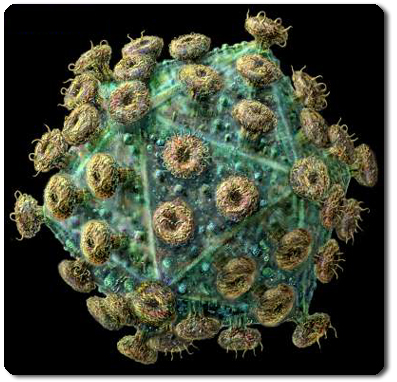
hiv virus


3. Viruses inject their genetic information into their host's cells, telling those cells to make more viruses instead (or in addition to) their normal functions. The AIDS virus is so devastating because it lowers our body's defenses in the immune system and is unaffected by the protein our body makes to prevent that sort of attack. In addition, it has spread worldwide as a sexually transmitted disease and contamination through blood.
4. Globalization has created epidemic after epidemic, whether it was the bubonic plague from Genoese and Venetian merchants in Europe, or Spanish conquistadores in the Americas, the spread of Western civilization throughout the world and global interconnectedness has made old diseases close to obsolete and new, deadlier ones much more affective and devastating in range and trauma. HIV/AIDS is a modern example of how globalization has allowed the virus to spread from the jungles of Africa to the Carribean to every inhabited continent.

Blog #13: Life—The Book! Possibility 2

1. I could also do an article on the Realities of Cryopreservation and the current science and technology on trying to halt death by freezing living things. This could also have the humanities aspect of preserving certain members of society for future generations, a concept similar to time capsules--and why not use a primary source if you can?

2. This just might happen:
3. Cryogenics involves freezing living things in order to preserve them for future research or for archives. It involves the use of cryoprotectants to prevent tissue damage so that cell death or decay is halted and the organism is effectively preserved.

4. Many science fiction stories and fantastic speculation surrounds cryogenics and mainly the preservation of humans so that they can awaken in the future. This article would examine how these fantasies have affected scientific cryo research and also the truths of whether or not it i possible. This would also tackle the moral and ethical aspects of temporarily stopping death, and the pros and cons of freezing people.

Blog #13: Life—The Book! 1st Possibility


IDEA 1: "Hitler's Designer Babies"(?)"Designing the Aryan Race"(?)"Blond hair and Blue eyes"(?)...


1. My Big Idea has to do with both Adults and Conception in that it deals with adults 'designing' babies. My article will have to do with Eugenics and its impact on history through the Nazi regime of the Third Reich and the human testing that went into attempts at 'selective breeding.' Since people knew that certain things coded for all of our physical traits, scientists tried to alter those traits in either mature subjects or in embryos inside pregnant women. Much of it was based on psuedoscience, but a lot of it was also based on mathematical probabilites that are directly connected to Mendelian genetics. Nonetheless, scientists still attempted to alter the phenotypes without changing the genotypes.
2.Nazi propaganda showing how it costs good families too much money to support people with hereditary diseases. [eugenics can fix that, and scientific experiments done on euthanized test subjects tried to cure hereditary disease and unwanted traits (like those deviating from the Aryan Race.)]
 Propaganda slide produced by the Reich Propaganda Office showing the opportunity cost of feeding a person with a hereditary disease
3. As far as I know, designing phenotypes of babies would mean altering their genotypes before development, which would mean going into a zygote's DNA and altering its genes or even inserting clips and sections of genes from other people into that baby. Thus, a person who only had Brown-eye alleles could have blue eyes, it's just a matter of the genetic engineering applied to crops today. Designer baby-making could also, on a simpler aspect, just employ Mendelian genetics and those sorts of probabilities, making it possible to accurately predict what a child will look like from his zygote and abort that zygote and invitroly fertilize another one that contains all the traits parents want afterwards.

4. A big part of Hitler's agenda (which means the Nazi agenda) was to establish the great Aryan race of Germany over the other, non-Anglo-Saxon races, specifically the Jews and the Slavs. This was racial profiling taken to the point of genocide and mass murder. Of course, their racism also heavily endorsed Eugenics, which would allow them to distinguish Aryans and create a Master Race, so that all Germans could be handsome and intelligent. Thus, eugenic testing was experimented with on people in the concentration camps. This meant that people imprisoned because of their race or illness (religious beliefs, political views, pedofilia, and homosexuality counted as illnesses) could be experimented with in the name of Eugenics. Therefore, the Holocaust not only entails the mass murder of millions upon millions, but also the cruel medical testing and abuse that occured in pursuit of Eugenics.

Thursday, October 14, 2010

BLog #12....BrainstORmING INTERNSHIPS

In my ideal internship, I want to be working with a School Psychologist and actually being a part of what she does, not just a fly on the wall. Hopefully, that means I'll be able to observe and advise the processes of school psychology. I heard that in many cases, parents will hire "advocates" to argue that their child is psychologically impaired in some way that makes him subject to special privileges. When parents do this just so that they can put their kid in an expensive private school, it is no longer the parents' expense, but instead is a burden that the child most deal with. Anyways, these meetings between School Psychologists and Advocates are kind of like debates in a way. Definitely melodramatic.
 
I would like to use my writing skills to help write up proper, professional reports on evaluations.I see myself doing a lot of listening and observing, but also, say, taking notes at the same time and then comparing that mine to my intern's.Those kinds of things would be very constructive and force me to think how I'll have to when I'm an actual School Psychologist. It would certainly be interesting to learn all about clinical Psychology.
 
 
I want to learn the structure of psychoogical evaluation, how to observe/listen to the patient--what to look for, how to write a properly structured report, how to actually help a child improve his mental state or speed things along.
 
 ... the notes I'll be taking...

Tuesday, October 5, 2010

Blog #10

Well, (1) I don't think I'm ready
(2) How I know I'm not ready is because I'm still editing and working on all the scirpts andn opening statement and stuff
(3) My last-minnute prep is listed above...it's not procrastination, it's just revisions and polishing and the stuff that needs to be done so that we crush the defense, or at least sound so awesome and amazing that the audience will love and remember us even if we lose, and hopefully support our side even if the jury doesn't.

i still think i should say "the two white defense lawyers will try and tell you..." as I point at said "two white lawyers."

it could be even more effective if i was like: "The two white defense lawyers will try and tell you that racial profiling will not happen as a result of this law. They will try to prove that skin color will not be considered when a policeman suspects a person..." something like that.

Tuesday, September 28, 2010

Noah and the Constitution...blog8

http://online.wsj.com/article/SB10001424052748703466704575489572655964574.html

1. This article is an 'editorial' from the Wall Street Journal that talks about the possible proposition of a 'Repeal Amendment' that means ""Any provision of law or regulation of the United States may be repealed by the several states, and such repeal shall be effective when the legislatures of two-thirds of the several states approve resolutions for this purpose that particularly describe the same provision or provisions of law or regulation to be repealed." Basically, the author believes that this would be a good step towards checking federal power (which is what Federalist No. 51 and the Constitution is all about), and that, even if the law were passed, it requires too much of a majority to be effective (an 'amendment convention' could also be called with 2/3 of the states consent--it's never happened). It is, in a sense, an "anti-Federalist" paper, but it talks more about power-abuse limitations than total states'-rights. In addition, the article explains that even if the bill were passed, it would serve more as a check/balance and less as a states'-rights power.
 
2. The article references specific parts of different amendments:
 
"The 13th and 14th Amendments limited the original power of states to violate the fundamental rights of their own citizens, while the 15th and 19th Amendments extended the right to vote to blacks and women. The 21st Amendment repealed another "progressive" reform: the 18th Amendment that empowered Congress to prohibit alcohol."
[examples of constitutional amendments as necessary]
 
The article sums up the main reasons why, in the author's opinion, the amendment would be good:
 
"The Repeal Amendment would help restore the ability of states to protect the powers "reserved to the states" noted in the 10th Amendment. And it would provide citizens another political avenue to protect the "rights . . . retained by the people" to which the Ninth Amendment refers. In short, the amendment provides a new political check on the threat to American liberties posed by a runaway federal government. And checking abuses of power is what the written Constitution is all about."
 
3. I thought that this article made a very convincing argument that was rational and logical, even if it could be called one-sided. Several quotes argue better than I can:
 
"Congress could re-enact a repealed measure if it really feels that two-thirds of state legislatures are out of touch with popular sentiment. And congressional re-enactment would require merely a simple majority. In effect, with repeal power the states could force Congress to take a second look at a controversial law."
 
"Perhaps its most important effect will be deterring even further expansions of federal power. Suppose, for example, that Congress decides to nationalize private pension investments. Just as it must now contemplate a presidential veto, so too would Congress need to anticipate how states will react. "